
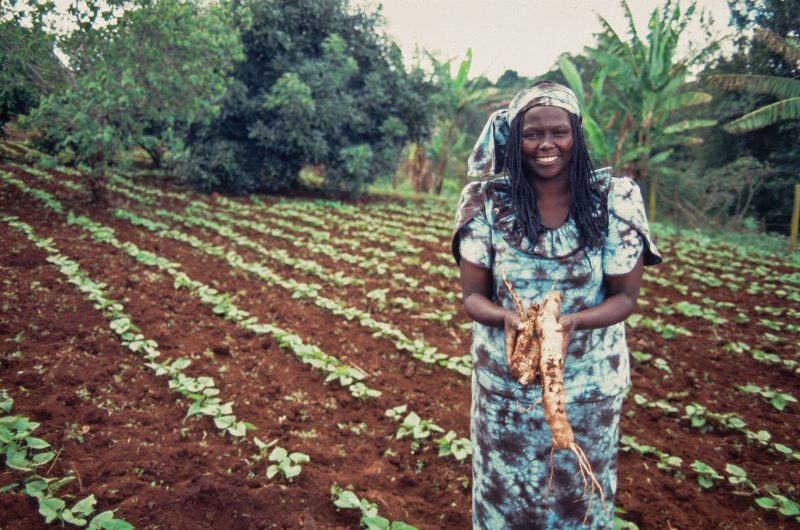
A single woman once stopped a skyscraper from being built in a public park, just by speaking up.
This Women's History Month, we profile Wangari Maathai. She didn’t use violence or money to change the world. Instead, she used something much smaller: a seedling.
Wangari was a woman of firsts. Born in 1940 in Nyeri, Kenya, she was always brilliant and grew up with a passion for activism, soon gaining a scholarship to study in the US. There, she studied at Benedictine College and the University of Pittsburgh.
She then returned to Kenya and was the first woman in East and Central Africa to earn a doctoral degree. She became the first female professor at the University of Nairobi, where she had earned her Ph.D earlier. She continued as the chair of the Department of Veterinary Anatomy from 1976, and later became an associate professor in 1977.
But Wangari knew she couldn’t change the world by staying inside a classroom.
The Green Belt Movement
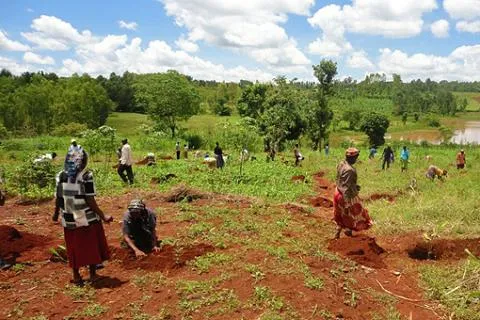
In the 1970s, Kenya was changing fast. Forests were being cleared at an alarming rate to make space for commercial farms, and without roots to hold soil down, the rain washed nutrients away. For Wangari, the environment wasn’t just about nature; it was about the people. If the land remained poor, the people would be poor as well.
As a solution, she began the Green Belt movement in 1977, which helped local village women in Africa plant more than 30 million trees. These women earned a small amount of money for every tree that survived. Inspired by this change, other African countries began similar movements, which repaired the earth and gave women their own income for the first time.
She launched a campaign in 1988 that sought to cancel the debts of poorer countries in Africa by 2000. She argued that such debts forced countries to sell off their natural resources just to keep up with payments. Her work here as a co-chair ended in a massive victory; the coalition successfully pressured wealthy nations to cancel over $100 billion in debt for 35 of the world's poorest countries. This meant billions of dollars could finally be spent on schools and hospitals instead of interest payments.
Her Life In Politics
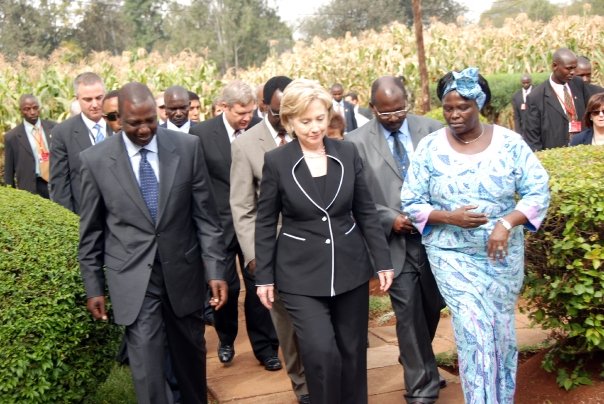
Wangari’s work wasn’t easy. Many didn’t appreciate what she had to say, and she was often beaten or arrested. But she never backed down.
In 2002, Kenyan people showed their support by electing her to Kenya’s National Assembly with 98 percent of the vote. In 2003, she was appointed Assistant Minister of Environment, Natural Resources, and Wildlife. The world finally recognised her in 2004 when she became the first African American woman to win the Nobel Peace Prize.
Today, her legacy lives on. She passed away in 2011 from cancer at 71 years old, but the forests she helped plant still grow. She taught us that the environment is the foundation of peace. Wangari’s life serves as a reminder that we don’t need to wait for a hero to fix the world. We just need the courage to go out there and plant a seed.
Sources: Guardian, Britannica, Nobel Prize.org